 How-to
Why Do Gutters Cause Foundation Damage?
Last Updated: November 19, 2026
Quick Summary
Clogged, leaking, or poorly placed gutters cause foundation damage by dumping water into the soil next to your walls instead of carrying it away. That soil becomes saturated, and the resulting hydrostatic pressure and erosion push against and weaken the foundation. Fixing the discharge point and grade is the key to preventing gutters foundation damage.
- Overflowing gutters saturate soil, which creates hydrostatic pressure that cracks foundation walls.
- A splash block alone leaves water within a couple of feet of the wall, so add an extension.
- On clay-heavy soil, 6 feet is the practical minimum downspout distance and 8 to 10 feet is better.
- Flush the gutter channel from the high end toward the downspout to avoid creating a new clog.
- Cracks on all four sides usually point to soil movement or settling, not a gutter problem.
Table of Contents
- How Gutters Cause Foundation Damage
- How Clogged Gutters Lead to Foundation Damage
- Gutter Drainage Problems That Put Your Foundation at Risk
- Signs of Foundation Water Damage to Watch For
- How Far Should Downspouts Discharge Water From the Foundation?
- How to Prevent Foundation Damage From Gutters
- Gutter Damage vs. Other Foundation Causes: How to Tell the Difference
- Request a Gutter and Foundation Assessment
- Frequently Asked Questions
How Gutters Cause Foundation Damage
Water is the quiet enemy of every foundation, and gutters foundation damage starts with a simple failure: water landing where it should not. A gutter system catches rainwater at the roof edge and moves it away from the house. When it clogs, leaks, or drains too close to the walls, water goes into the soil around your foundation instead.
The Path Water Takes When Gutters Fail
Think about a heavy rain. Water sheets off the roof, drops into the gutter channel, flows to a downspout, and exits at ground level. That chain has four links, and any one can break:
- The roof edge sheds water into the gutter.
- The gutter channel carries it sideways to the downspout.
- The downspout carries it down the wall.
- The discharge point sends it away from the house.
Break link one and water overshoots the gutter. Break link two and the channel overflows. Break link three and water runs down the fascia. Break link four and everything pools at the wall.
How Clogged Gutters Lead to Foundation Damage
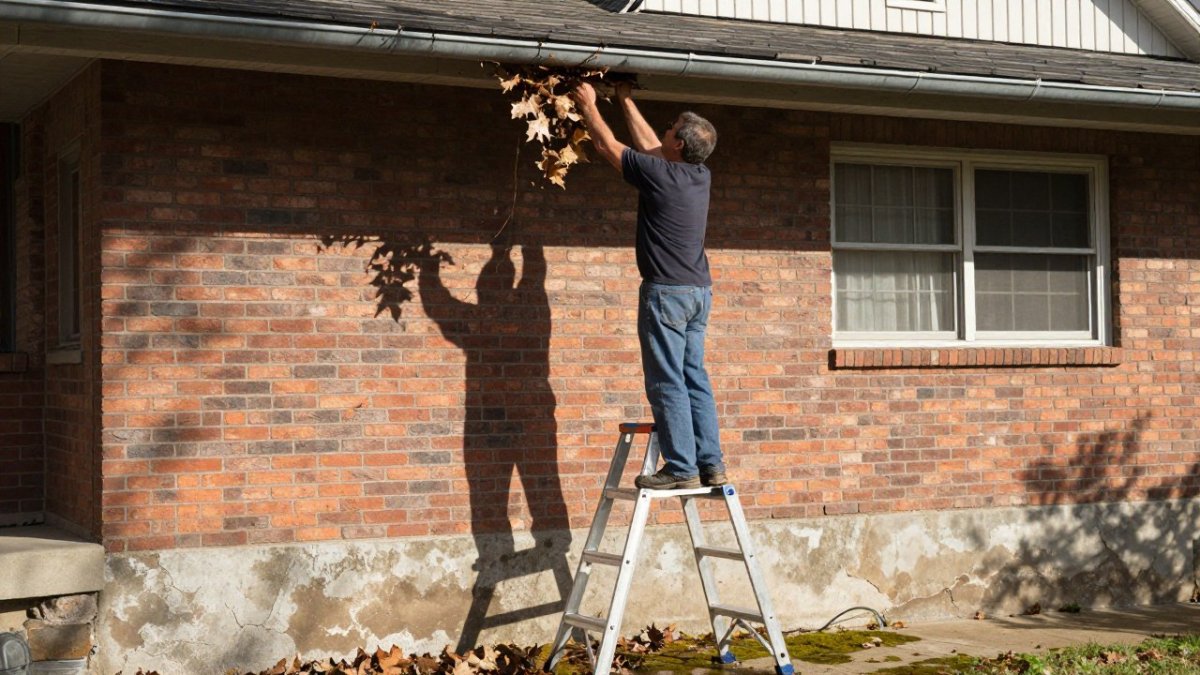
Clogged gutters foundation damage is the most common version of the problem, and it follows a predictable sequence. Leaves, shingle grit, and seed pods collect in the channel.
That overflow lands in a concentrated stream, week after week, in the same spot, and the soil there stays wet long after the rain ends.
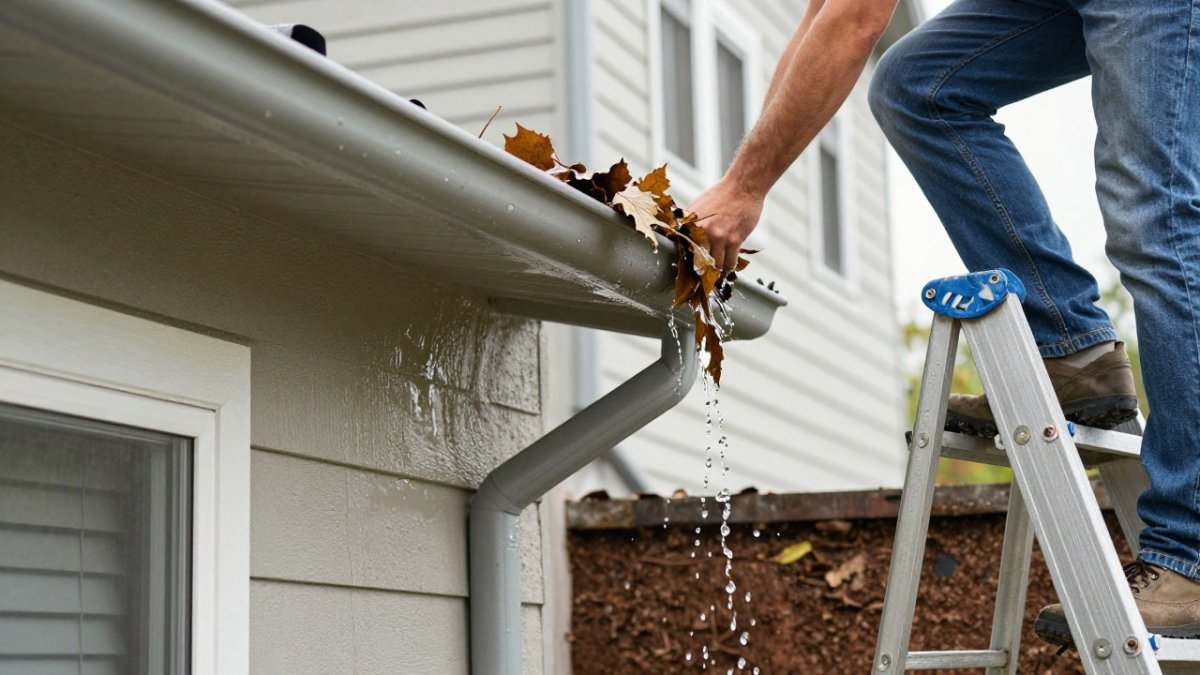
Overflow, Soil Saturation, and Hydrostatic Pressure
Once soil stays wet, three things happen in order.
Soil saturation means the dirt around your foundation can no longer absorb more water. It becomes heavy and soft, and clay-heavy soil holds water for days.
Hydrostatic pressure is the force wet, swollen soil pushes against your foundation walls. When saturated soil presses inward, cracks open and water seeps through.
Soil erosion is the third stage.
Gutter Drainage Problems That Put Your Foundation at Risk
Gutter drainage problems go beyond clogs.
Improper gutter slope is the first. Gutters need a slight pitch toward the downspout so water flows instead of sitting.
Leaking gutters are the second.
Downspout placement is the third.
Watch out: a downspout that discharges into a buried pipe or splash block pointed back toward the house can quietly concentrate water at the worst possible spot.
Signs of Foundation Water Damage to Watch For
Signs of foundation water damage usually show up long before a crack becomes a real problem. The trick is knowing where to look.
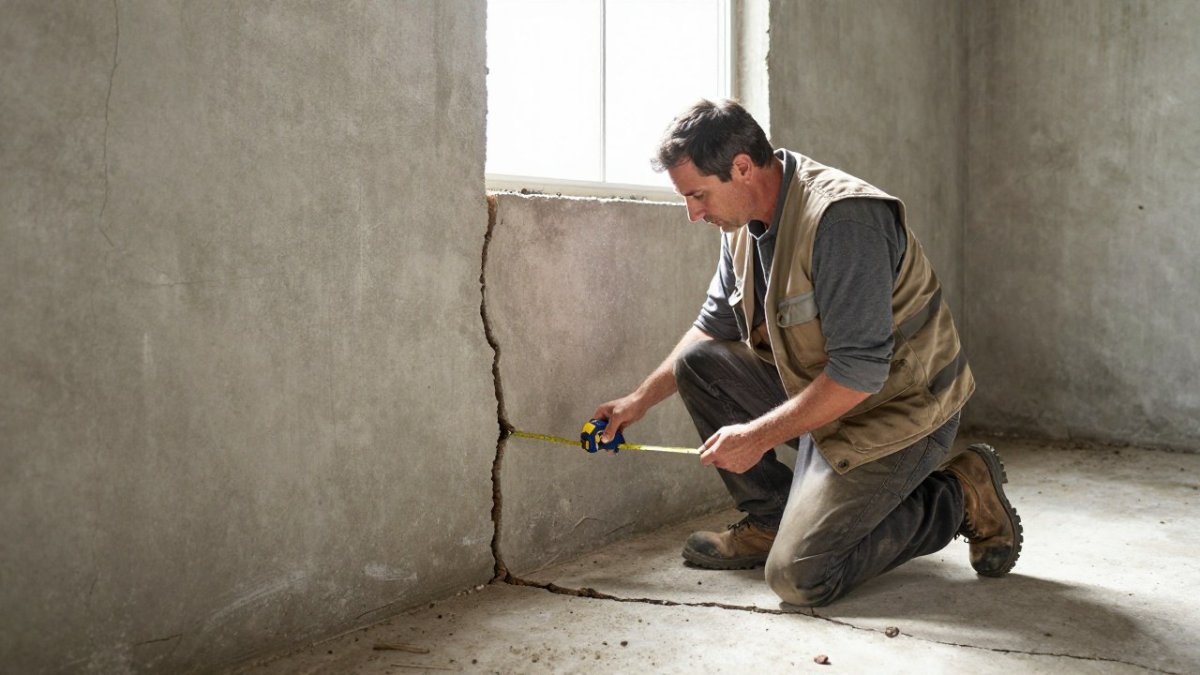
Start outside. Look for soil that has pulled away from the foundation, leaving a visible gap.
Then look inside:
- Cracks in the drywall, especially above door and window corners
- Doors or windows that stick in one season and not another
- Water stains or damp patches low on the basement or garage walls
If you are also seeing water inside the walls, our guide to signs of hidden water damage in walls walks through the warning signs room by room.
How Far Should Downspouts Discharge Water From the Foundation?
Downspouts should discharge water well away from the foundation, and farther is better on sloped ground. The right distance depends on your soil, yard slope, and season, and the only way to confirm it is to watch where the water goes after a storm.
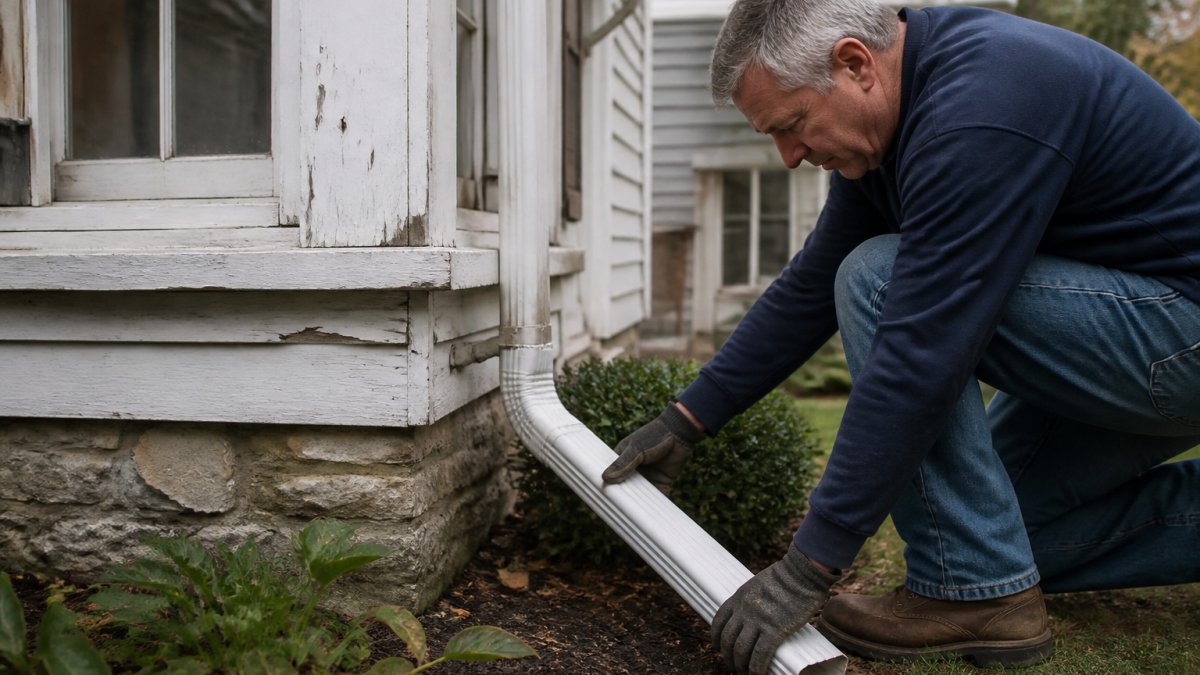
A splash block alone is not enough. It spreads water out but still leaves it within a couple of feet of the wall. An extension is the practical fix.
How Soil and Slope Change the Number
The 4-to-6-foot range is a starting point, not a universal rule. Adjust it to the conditions around the house.
- Sandy soil: Water drains quickly, so 4 feet on flat ground is often enough. Sandy soil does not hold water against the wall the way clay does.
- Clay-heavy soil: Water sits in the soil for days, so 6 feet is the practical minimum and 8 to 10 feet is better. Clay swells when wet, and that swelling is what pushes on foundation walls.
- Sloped ground: If the yard slopes back toward the house, a short extension just moves the pooling spot. Run water to a grade that carries it away from the structure, or to a swale that routes it around the house.
How to Verify the Discharge Point Works
Distance on paper is not the same as performance in a storm. After a heavy rain, walk the perimeter and check three things: whether water is pooling at the discharge point, whether the soil near the wall is soft or spongy, and whether water is running back toward the foundation. If any are true, the extension is too short or the grade is wrong.
When to Call a Gutter Professional or Foundation Specialist
Most discharge problems are a weekend fix with an extension and a rake. Call a gutter professional if downspouts repeatedly clog, the channel will not hold pitch, or water pools at the discharge point no matter how far you extend. Call a foundation specialist if you see cracks that widen over time, doors that stick year-round, or soil that stays wet near the wall long after the rain ends.
A Quick Troubleshooting Checklist
- Measure the distance from the wall to where water actually lands
- Check the grade at the discharge point with a level or a straightedge
- Look for pooling or spongy soil after a heavy rain
If you are also seeing water inside the walls, our guide to signs of hidden water damage in walls walks through the warning signs room by room. Water that enters through a wall often starts as a roof or gutter problem above.
Recommended downspout discharge distance by soil type
How to Prevent Foundation Damage From Gutters
How to prevent foundation damage from gutters comes down to a sequence, not a list. The order matters because fixing a downspout before the channel is clear just moves standing water to a new spot. Work top-down and outside-in: clear the roof edge, then the channel, then the seams, then the discharge point, then the soil grade.
Step 1: Clear the Roof Edge and Channel
Start at the roof. Shingle grit, seed pods, and leaf litter collect at the roof edge and wash into the gutter. Remove debris from the roof edge and flush the channel with a hose, working from the high end toward the downspout so you can see where water actually flows.
Watch out: flushing a dry channel from the low end can push debris into the downspout and create a clog you did not have before. Always flush from the high end.
Step 2: Check Pitch and Seal Seams
Once the channel runs clear, check the pitch by running water and watching where it slows or stands. A gutter that holds water in the middle will overflow at the low point, usually above the foundation. Re-pitch or re-hang the run before sealing anything, because a seam that leaks because water stands behind it will leak again after you seal it.
Step 3: Fix the Discharge Point
Extend every downspout so water lands on ground that slopes away from the house. A splash block alone leaves water within a couple of feet of the wall. Add an extension or a buried line that carries water to a grade that moves it off the lot, then check the discharge point after a heavy rain.
Step 4: Rebuild the Grade
Overflowing gutters can wash soil away from the base of the house, leaving a gap that funnels more water toward the wall. Adding soil where it has settled or eroded and sloping it away from the foundation helps protect the wall.
Seasonal and Site-Specific Risk Factors
The same gutter failure causes more damage on some sites than others. Adjust the schedule and the fix to the conditions around the house.
- Heavy rainfall: In regions with intense storms, a single overflow event can saturate soil that took weeks to dry. Inspect after every major storm, not just twice a year.
- Freeze-thaw conditions: Water that stands in a gutter or pools at the foundation freezes, expands, and opens cracks in both the gutter and the foundation wall. In cold climates, clear the channel before the first freeze and confirm downspouts drain before winter.
- Expansive soils: Clay-heavy soil swells when wet and shrinks when dry, and that cycle pushes and pulls on foundation walls. On expansive soil, the discharge distance and the grade matter more, because the soil holds water longer.
A Prioritized Prevention Checklist
- Clear the roof edge of shingle grit and debris that feed the gutters
- Flush the channel from the high end toward the downspout
- Check the pitch and re-hang runs that hold water
Roof problems and gutter problems often travel together. Our guide to spotting roof water damage before it spreads covers the roof-side warning signs that show up before the gutter starts overflowing.
Gutter guards can cut down on debris, but they do not fix drainage. As Golden Rule Contractors explains in their guide to gutter problems and foundation damage notes, guards do not address how far downspouts discharge water, which is the real driver of foundation moisture.
Gutter Damage vs. Other Foundation Causes: How to Tell the Difference
Not every foundation crack traces back to a gutter. Separating the causes saves you from paying for the wrong repair.
| Sign | Likely Gutter Cause | Likely Another Cause |
|---|---|---|
| Wet soil near downspouts | Yes | No |
| Cracks near one corner | Yes | Maybe |
| Cracks on all four sides | No | Soil movement, settling |
| Staining under a gutter seam | Yes | No |
| Doors stick year-round | No | Foundation settlement |
| Efflorescence low on walls | Maybe | Groundwater, poor drainage |
| Overflow during storms | Yes | No |
A few patterns point clearly away from gutters.
The honest answer is that a full assessment beats guesswork. Gutter problems, roof leaks, and foundation movement often overlap, and fixing one without the others wastes money.
That is where we come in.
Request a Gutter and Foundation Assessment
Every rainy season tests your home's exterior, and gutters are an important part of protecting it. If you have noticed overflow or wet soil near the walls, it is worth getting a professional look before the next storm. Wizard Restoration and Remodeling LLC offers roof and gutter repairs to help protect your home from water damage.
Frequently Asked Questions
Can bad gutters cause foundation problems?
Yes. Gutters that clog, leak, or discharge too close to the house concentrate rainwater in the soil right beside the foundation. That soil soaks, expands, and pushes against the wall, which is how hydrostatic pressure builds up. Over time the result can be foundation cracks, water seepage into a basement or crawl space, and uneven settling. The gutter itself is rarely the whole story, though. Where the downspouts send the water matters just as much as whether the gutters are clear.
How do clogged gutters cause foundation damage?
When leaves and debris block a gutter, rainwater has nowhere to go but over the front edge. It lands in a narrow strip of soil along the wall instead of being carried to a downspout and away from the house. That strip stays saturated after every storm, soil erodes, and water seeps into foundation cracks. The fix is straightforward: clean the gutters at least twice a year, more often if you have overhanging trees, and confirm the downspouts carry water well away from the base.
What are the signs that gutter drainage is affecting a foundation?
Watch for soil pulled away from the wall or a visible trench under the downspout, standing water along the foundation after rain, and efflorescence, the white chalky staining on brick or concrete. Inside, look for damp spots on basement walls, a musty smell, and cracks that widen over time. Any of these signs of foundation water damage deserve a closer look, because catching them early usually means a gutter repair rather than structural work.
How far should downspouts discharge water from a foundation?
Aim for at least 4 to 6 feet from the wall, and push it farther on a slope that runs back toward the house. A 6-foot extension is a cheap upgrade that solves most of the problem. Check that the ground slopes away from the foundation at roughly 1 inch per foot for the first 6 feet, and that the discharge point does not dump onto a neighbor's property or back into a window well.