 How-to
Signs of Hidden Water Damage in Walls: 7 Warning Signs
Table of Contents
- How to Check Walls for Water Damage: A Safe Step-by-Step Workflow
- 7 Signs of Hidden Water Damage in Walls
- Signs of Water Damage Behind Drywall: What You Can't See
- How to Find a Water Leak Inside a Wall
- How Long Can a Water Leak Go Unnoticed?
- Health and Electrical Safety Risks of Hidden Water Damage
- What Happens During Professional Inspection and Repair
- Frequently Asked Questions
Last Updated: October 14, 2026
How to Check Walls for Water Damage: A Safe Step-by-Step Workflow
The best way to find hidden water damage in walls is to work from the outside in: look, listen, smell, then confirm with a moisture meter before you open anything up. Guessing leads to torn-out drywall and surprise bills. This guide covers the seven warning signs of hidden water damage, how to trace a leak to its source, and what to expect from a professional inspection.
Water that stays trapped inside a wall cavity rarely announces itself. It shows up as a faint mark, a soft spot, or a smell you can't place. By the time most people call us, the damage has been spreading for weeks.
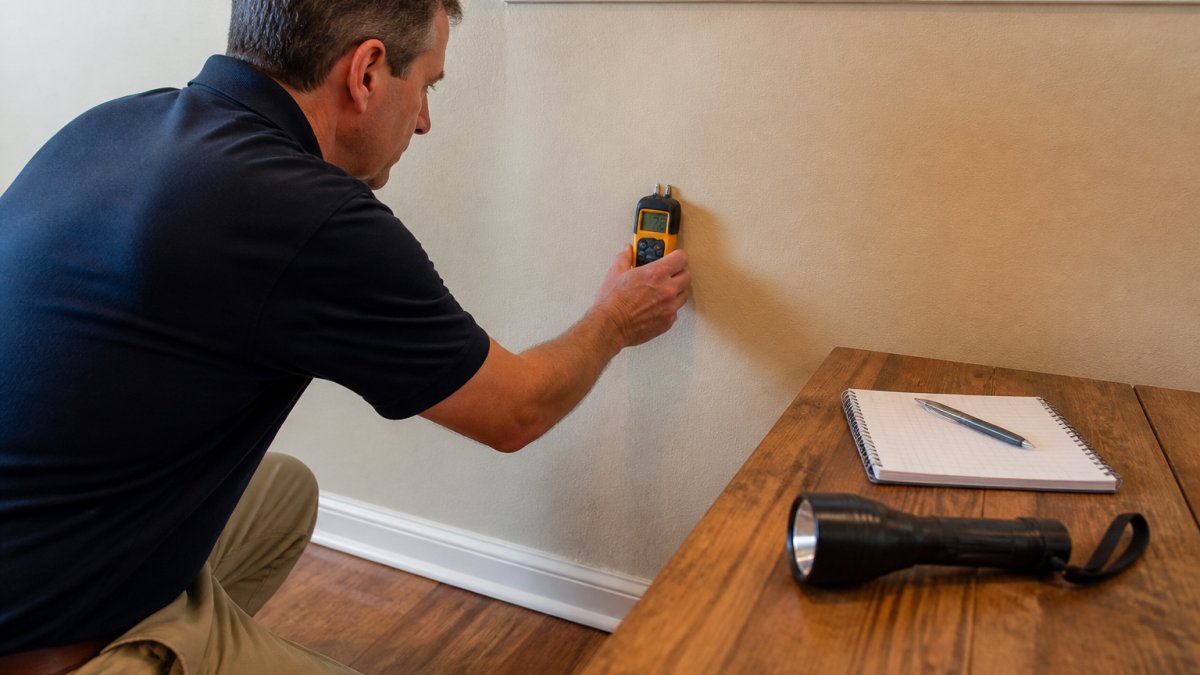
What You'll Need Before You Start
Gather these tools before you begin. A flashlight, a moisture meter, a screwdriver, and a notepad cover most of the job.
- Flashlight or phone light
- Pin-type or pinless moisture meter
- Screwdriver (for outlet covers)
- Notepad or phone for photos
- Nose and ears (seriously)
Step-by-Step Diagnostic Workflow
- Walk each room and note any stain, bubble, or warped spot.
- Press the wall with your palm to feel for soft or cool areas.
- Smell near baseboards and outlets for musty or earthy odors.
- Listen for dripping or running water when the house is quiet.
- Test suspect spots with a moisture meter and write down readings.
- Check the water bill for unexplained increases.
- Shut off the water supply and call a professional if readings are high.
The EPA guide to mold and moisture control explains why damp building materials need fast attention. Mold can start growing on wet drywall within a day or two.
7 Signs of Hidden Water Damage in Walls
Hidden water damage in walls usually shows up in seven ways: stains, paint changes, warped drywall, soft spots, musty odors, mold growth, and rising water bills. Any one of these deserves a closer look. Two or more together almost always mean an active leak.
Visible Stains and Discoloration Patterns
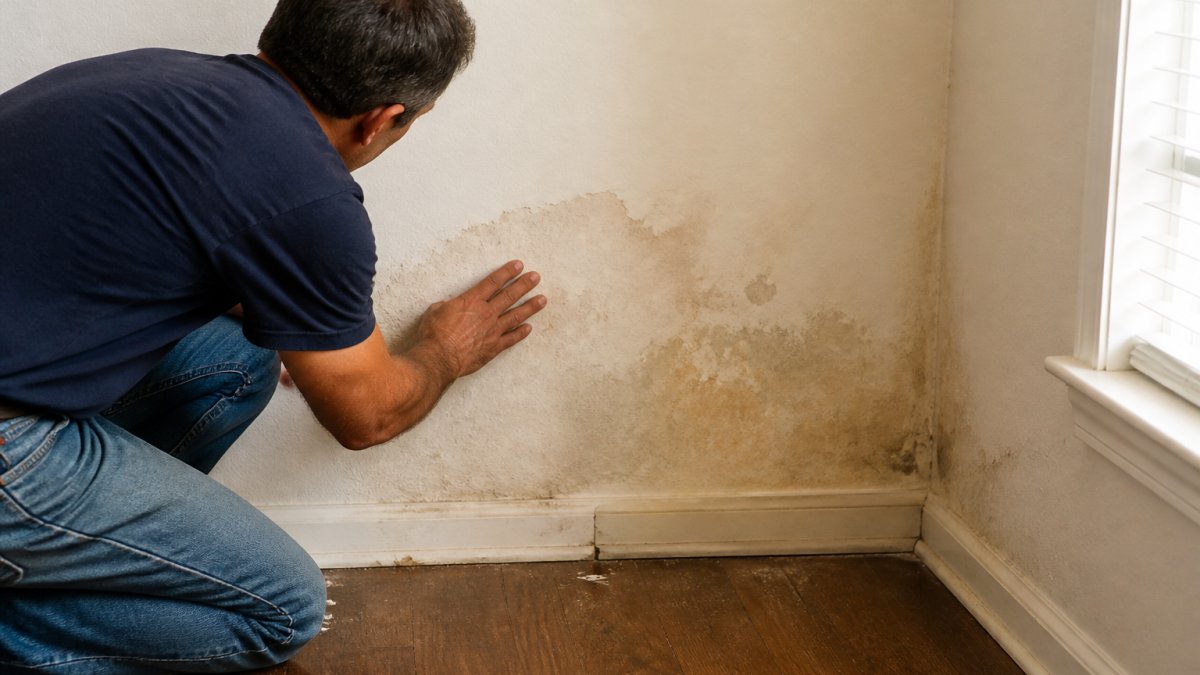
A yellowish-brown stain or watermark on drywall is the classic first clue. The shape tells a story.
- A ring with a darker edge means the leak is slow and ongoing.
- A streak running downward points to a source above.
- A stain near the ceiling often means a roof or plumbing leak.
- A stain low on the wall suggests water wicking up from the floor.
Paint and Drywall Changes: Peeling, Bubbling, Warping, Soft Spots
Peeling, bubbling, or blistering paint means moisture is pushing from behind the wall surface. Warped or swollen drywall and a spongy surface are later-stage signs. If a wall feels soft when you press it, the drywall has already absorbed water and lost its strength.
Musty Odors, Mold, and Mildew
A musty or earthy smell is one of the most reliable signs of hidden water damage. Mold and mildew grow where moisture sits, often behind baseboards or inside the wall cavity. If you smell it but see nothing, the source is likely concealed.
Signs of Water Damage Behind Drywall: What You Can't See
Signs of water damage behind drywall include soft spots you can feel, a bulge in the wall surface, and stains that keep growing. Water migration spreads sideways and downward through building materials, so the visible mark is often smaller than the wet area behind it. A moisture meter confirms what your eyes can't, but only if you know how to read it.
How to Interpret Moisture Meter Readings
A moisture meter does not tell you whether you have a leak. It tells you how wet one spot is compared to another. That distinction matters, because a single reading on its own can mislead you.
Here is the practical approach most restoration technicians use:
- Take a baseline reading on a dry wall. Pick a wall in another room that shows no stains, no odor, and no soft spots. Write that number down.
- Take a reading at the suspect spot. Use the same meter, the same setting, and the same pressure against the wall.
- Compare the two numbers. The difference between the suspect spot and the dry baseline is the signal. A suspect reading that is meaningfully higher than the dry baseline points to moisture. A reading that matches the baseline does not.
- Take several readings across the area. Moisture is rarely uniform. Readings that climb as you move toward a fixture or a corner help you map the wet zone and narrow the source.
- Re-check after a rain or after running the fixture. If the reading rises after a specific event, you have linked the moisture to that source.
Why One Reading Is Not Proof
Moisture meters are sensitive to more than water. Metal framing, foil-backed insulation, dense plaster, and even some paints can push a reading higher than the actual moisture content. Pin-type meters read at the surface where the pins touch; pinless meters read a shallow depth and can be thrown off by what is just behind the drywall. That is why a reading is a clue, not a diagnosis.
A common pattern is a reading that looks alarming on one wall but matches the dry baseline two feet away. In that case, the meter is likely reacting to the material, not to a leak. The reverse is also true: a wall can feel dry to the touch and still read high inside the cavity, because drywall wicks moisture away from the surface.
How to Find a Water Leak Inside a Wall
Finding the source is the part most homeowners get wrong. They patch the stain and the leak keeps running. The fix is to trace the water back to where it enters the wall, not where it shows up.
Work from the most likely source outward, in this order:
1. Plumbing supply and drain lines. Bathroom and kitchen walls are the most common culprits. Check the supply lines under sinks, the shutoff valves, the seals around tubs and showers, and the toilet supply and wax ring. A supply leak runs continuously and often leaves a stain directly below the pipe. A drain leak is intermittent, it only shows up after the fixture is used, which is why the stain seems to grow and then stop.
2. Appliances and fixtures on the other side of the wall. A refrigerator ice maker line, dishwasher, washing machine, or water heater on the opposite side of a wall can push water through the shared cavity.
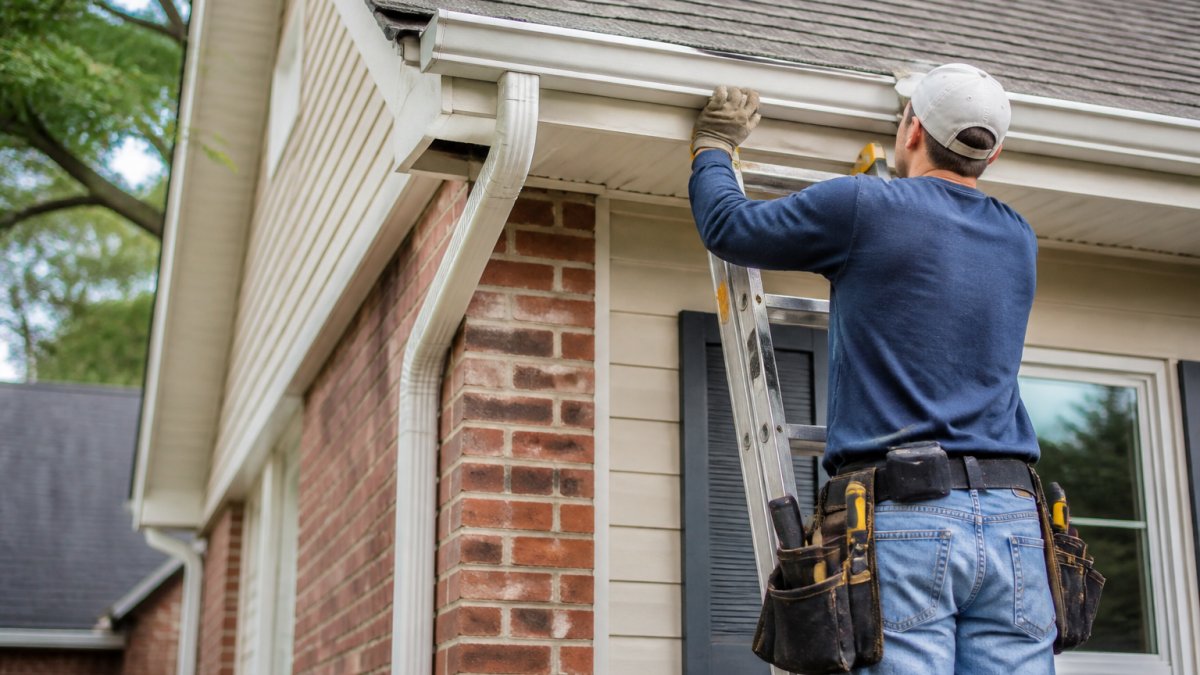
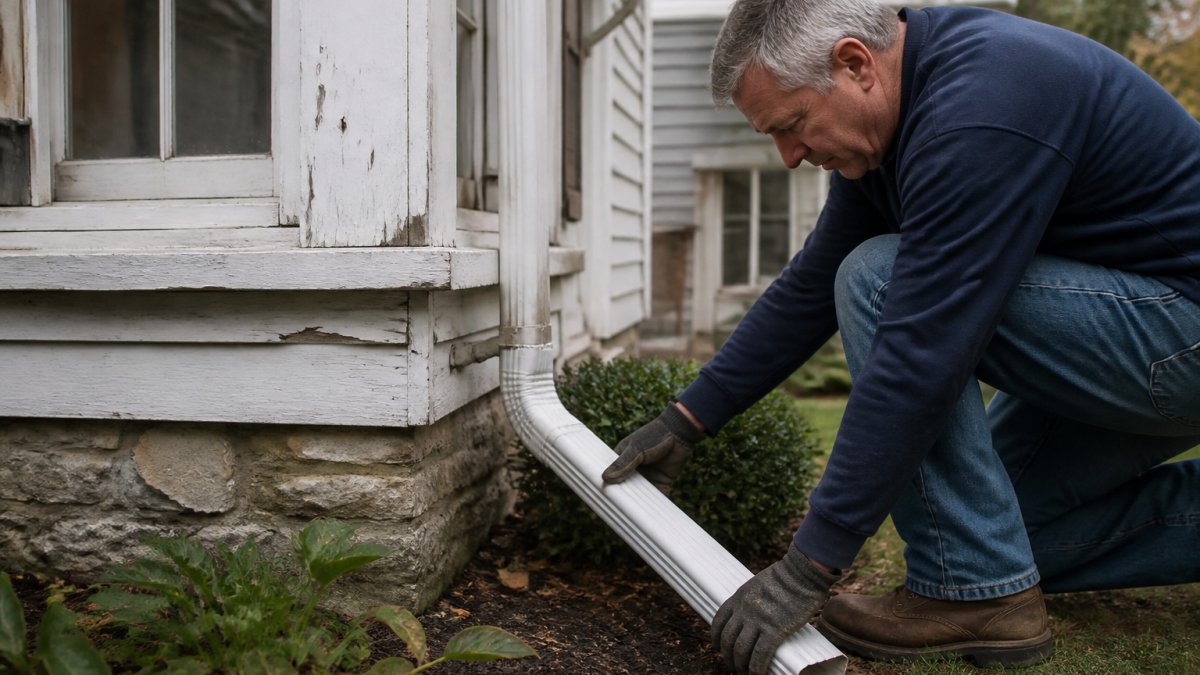
3. Roof, attic, and ceiling pathways. Roof and gutter failures show up high on the wall first, often near the ceiling line or in an upstairs room.
4. Windows, doors, and exterior walls. Failed flashing, cracked caulk, and clogged weep holes let rain in around openings.
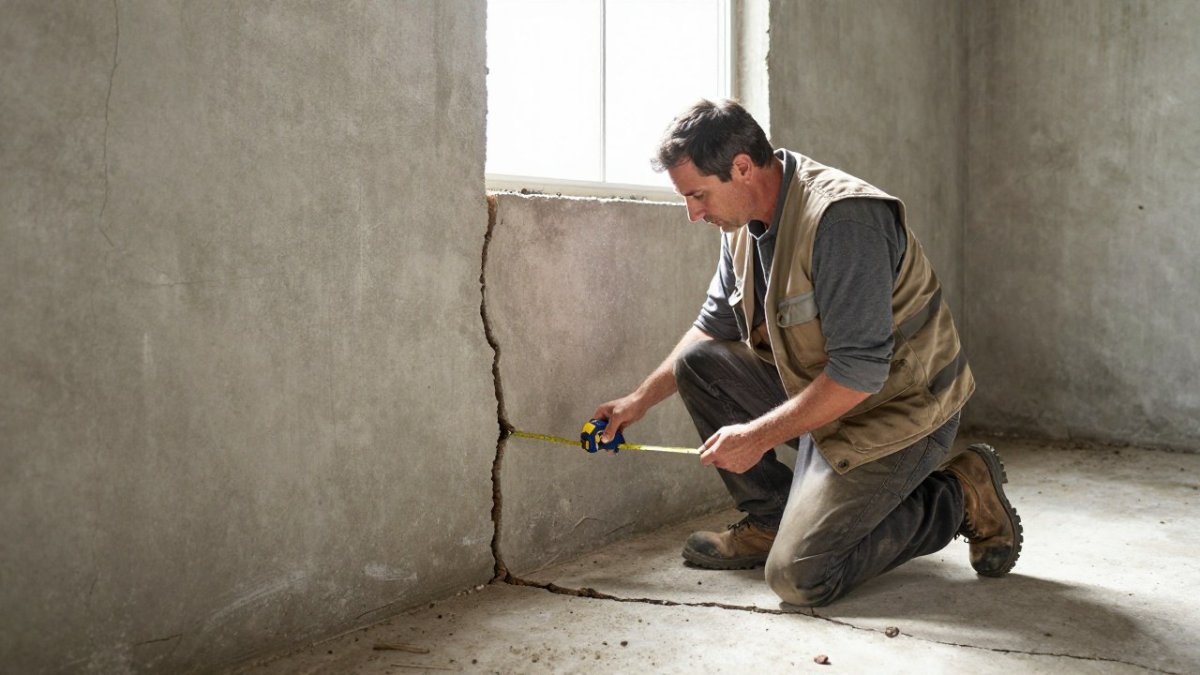
5. Foundation and grading. Water wicking up from the floor shows as a stain low on the wall with no obvious overhead source.
Which Signs Mean Stop and Call a Professional
Some leaks are safe to trace yourself. Others are not. Stop and call a licensed professional if you see any of the following:
- A stain that grows noticeably within a day or two, which points to an active, high-volume leak.
- Water near an outlet, switch, or panel, or any wall that feels damp around wiring.
- A musty smell combined with visible mold, especially mold covering an area larger than roughly a square foot.
- A soft or sagging ceiling, which can indicate trapped water above and a collapse risk.
- A water bill that jumped with no change in habits, which often means a hidden supply-line leak.
- Any leak you cannot trace after checking the five sources above.
A leak detection professional can use thermal imaging, acoustic listening, and pressure testing to pinpoint the source without opening the wall. That step is usually cheaper than tearing out drywall to guess.
How Long Can a Water Leak Go Unnoticed?
A slow water leak can go unnoticed for weeks or even months. Small drips hide inside the wall cavity, where nobody sees them. The longer it runs, the more structural damage builds up. That's why rising water bills and faint odors matter: they're often the only early warning.
Health and Electrical Safety Risks of Hidden Water Damage
Hidden water damage creates two serious risks: mold exposure and electrical hazards. Damp drywall feeds mold, which can bother people with allergies or breathing issues (the CDC). Water near wiring raises the chance of a short or a fire. If a wall with outlets feels damp, cut power to that circuit and keep everyone away until it's checked.
What Happens During Professional Inspection and Repair
A professional inspection starts with a visual check, moisture readings, and leak detection tools. From there, the repair follows a set path:
| Stage | What Happens | Why It Matters |
|---|---|---|
| Inspection | Moisture readings and leak tracing | Finds the true source |
| Containment | Sealing off the work area | Stops mold spread |
| Drying | Fans and dehumidifiers run | Removes trapped moisture |
| Repair | Drywall, paint, and pipe fixes | Restores the wall |
Document everything with photos for your insurance claim. Water damage restoration often qualifies for coverage, and clear records make the process smoother.
This is where a single team helps. Wizard Restoration and Remodeling LLC handles roofing and gutters, interior and exterior painting, siding, and full remodeling, so one crew can fix the wall it damaged. No juggling three contractors.
If you're planning a larger project, ask about handling the whole job start to finish. We also provide clear quotes, so you won't face surprise costs halfway through.
Frequently Asked Questions
How to check walls for water damage?
Start with a visual inspection for stains, discoloration, or bubbling paint. Press gently on the wall to feel for soft spots or warping. Use a moisture meter to check for elevated readings, and follow the safe diagnostic workflow above. If you find signs of hidden water damage, call a professional to assess the leak source and prevent further damage.
How long can a water leak go unnoticed?
A slow leak inside a wall can go unnoticed for weeks or even months because water often travels along framing and pools in hidden areas. Early signs may be subtle, like a faint musty odor or a small water stain. Regular moisture checks and prompt attention to any suspicious signs can help you catch leaks before they cause major damage.
Can a moisture meter detect water behind drywall?
Yes, a moisture meter can detect elevated moisture levels behind drywall. Pin-type meters measure moisture at the surface, while pinless meters scan deeper. Consistent readings above 16% indicate a problem. Use the meter to map the affected area, but for a definitive diagnosis, a professional can use thermal imaging or other tools to confirm hidden water damage.
When should you call a water damage restoration professional?
Call a professional if you see multiple signs of hidden water damage, such as stains, warping, and musty odors together. Also call if you find a moisture reading above 16%, suspect a leak behind a wall, or notice mold growth. Professionals have the tools to locate the leak, assess structural damage, and handle drying and repairs safely.
A hidden leak never fixes itself. The longer water sits inside your walls, the more it costs to repair. Wizard Restoration and Remodeling LLC offers one team for roofing, gutters, painting, siding, and full remodeling, along with practical results and reliable service. Request a quote today and protect your home before the damage spreads.