 How-to
7 Signs of Foundation Damage in Homes to Watch For
Last Updated: November 22, 2026
Quick Summary
Signs of foundation damage in homes include widening cracks in interior walls and ceilings, stair-step cracks in exterior brick or block, and horizontal cracks in block foundation walls. Sticking doors and windows, uneven or sloping floors, and gaps or separating siding also point to foundation damage. Cracks wider than a quarter inch that keep growing are structural, not cosmetic.
- Document each crack's width and length over time; a crack stable for a year is less concerning.
- Horizontal cracks in a block foundation can signal soil pressure pushing against the wall.
- If several doors and windows stick in one area, that pattern points to movement on that side.
- Take monthly photos of cracks, gaps, and sloped floors from the same angle with a ruler for scale.
- Call a professional for widening cracks, multiple misaligned doors, a bulging wall, or a floor that keeps sloping.
Table of Contents
- 1. Cracks in Interior Walls and Ceilings
- 2. Cracks in Exterior Brick, Masonry, or Foundation Walls
- 3. Sticking Doors, Sticking Windows, and Misaligned Frames
- 4. Uneven, Sloping, or Dipping Floors
- 5. Gaps, Separating Siding, and Warped Walls
- Foundation Problems vs. Settling: How to Tell the Difference
- Signs of Foundation Damage in Homes Pictures: What to Compare
- How to Fix Foundation Problems on a House
- Frequently Asked Questions
1. Cracks in Interior Walls and Ceilings
Foundation damage in homes often shows up first as cracks you can see from your couch. A thin hairline crack above a doorway may be nothing. A widening, zigzagging crack that grows month by month is a different story. Cracks are clues, not verdicts.
The pattern matters more than the crack itself. Cracks that follow a stair-step path, or that open wider at one end, suggest movement in the structure below. Vertical cracks in drywall are usually cosmetic. Diagonal cracks radiating from a corner deserve a closer look.
Cosmetic Cracks vs. Structural Cracks
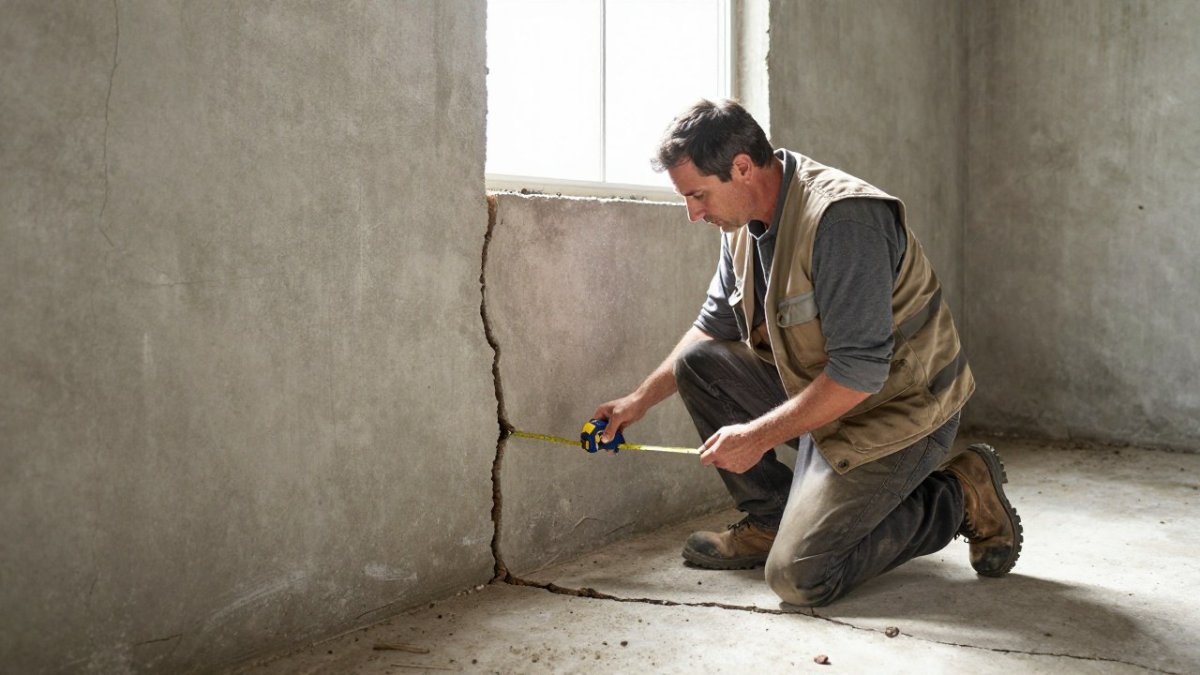
Cosmetic cracks are narrow, stable, and often tied to settling drywall or seasonal humidity. Structural cracks are wider than a quarter inch, keep growing, or appear alongside other warning signs. The American Society of Home Inspectors recommends documenting any crack's width and length over time. A crack that stays the same for a year is far less concerning than one that widens in weeks.
Watch out: painting over a growing crack hides the evidence without fixing the cause. Track it with a pencil mark and a date instead.
2. Cracks in Exterior Brick, Masonry, or Foundation Walls
Exterior cracks tell you what the inside can't. On brick and block foundation walls, look for stair-step cracks that follow the mortar joints. These usually point to foundation settling or soil movement beneath one corner of the house.
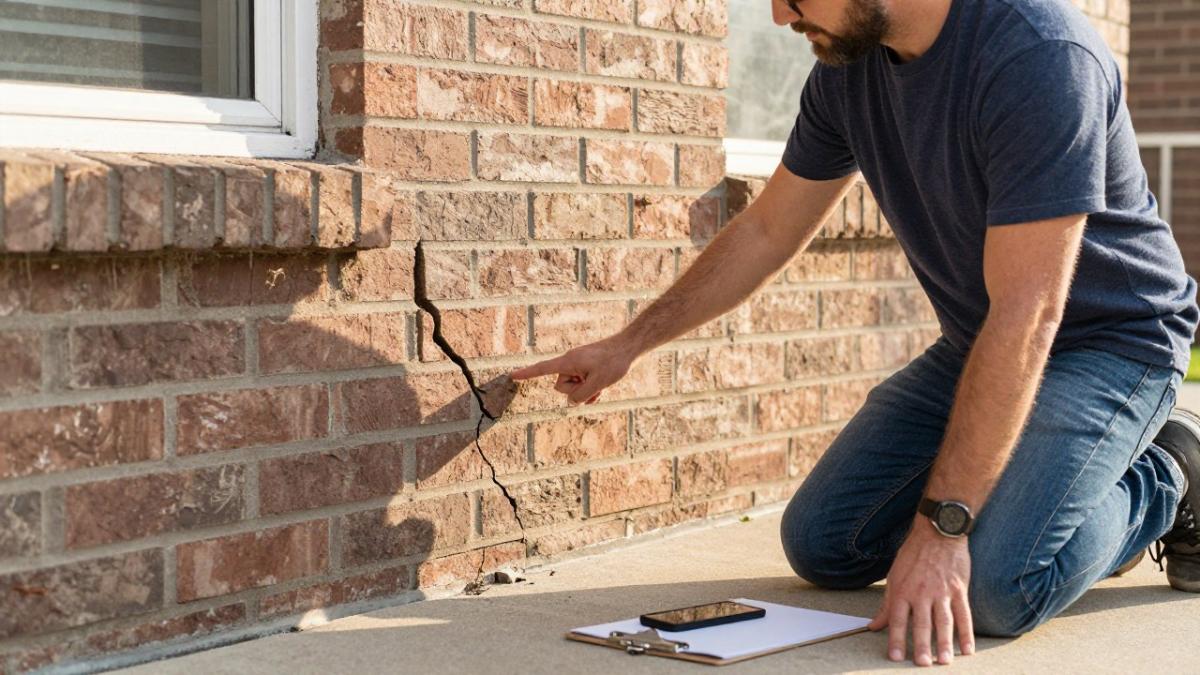
Horizontal cracks in a block foundation are the ones to take seriously. They can signal soil pressure pushing against the wall. Crumbling concrete or flaking mortar near the base points to water exposure. According to the National Association of Home Builders, proper drainage around the foundation is one of the most effective ways to limit this kind of movement.
3. Sticking Doors, Sticking Windows, and Misaligned Frames
A door that suddenly won't latch is a classic early sign of foundation movement. When the frame shifts, the door and window no longer sit square. You may notice sticking windows, gaps at the top of a door, or a latch that misses the strike plate.
This is often the easiest sign for a homeowner to spot. Walk through every room and open each door and window. If several stick in the same area of the house, that pattern points to movement on that side. One sticky door in a humid month is normal. Five misaligned doors after a dry summer is not.
4. Uneven, Sloping, or Dipping Floors
Floors that slope, dip, or bounce underfoot are a common foundation issue. A marble that rolls across the kitchen floor on its own is a simple test. So is a level laid across a doorway.
Sloping floors often trace back to foundation settling or sinking on one side. Bouncing floors can point to weak floor joists rather than the foundation itself. The distinction matters, because the fix is different. Foundation heaving, where soil pushes up, can also warp a floor in the opposite direction.
5. Gaps, Separating Siding, and Warped Walls
Gaps around windows, doors, walls, and fixtures are quiet warning signs. So is siding or trim that pulls away from the house. Warped or bulging walls are the most serious version of this problem.
Check the exterior for separating siding and trim that no longer sits flush. Inside, run a hand along walls near the ceiling and floor. A bulge or bow means pressure is building somewhere. Gaps around fixtures, like a fireplace or built-in cabinet pulling from the wall, are worth flagging during a foundation inspection.
Foundation Problems vs. Settling: How to Tell the Difference
Foundation settling is normal, gradual movement as soil compacts under a new or older home. Foundation problems are movement that continues, accelerates, or causes visible damage. Settling usually stabilizes within a few years. Active foundation issues do not.
Here is how to compare the two:
| Signal | Normal Settling | Possible Foundation Problem |
|---|---|---|
| Crack width | Hairline, stable | Wider than 1/4 inch, growing |
| Doors and windows | One sticks occasionally | Several misaligned in one area |
| Floors | Slight, even slope | Noticeable dip or bounce |
| Timeline | Settles within a few years | Keeps changing year to year |
Not every sign of movement means serious damage. Small cracks or minor shifting can feel alarming, but they don't always point to a structural problem. Water is often a contributing factor in foundation issues, since poor drainage can move soil over time. If you want to understand that link, read our guide on why gutters cause foundation damage.
Signs of Foundation Damage in Homes Pictures: What to Compare
Photos help you track change over time. Take pictures of every crack, gap, and sloped floor from the same angle each month. Compare the width against a coin or a ruler in the frame.
What to capture:
- Interior wall and ceiling cracks with a ruler for scale
- Exterior brick and foundation cracks at the mortar joints
- Gaps around doors and windows
- Separating siding and trim
- Any warped or bulging wall
Store the photos in one folder with dates. When a professional inspects the home, that timeline is worth more than any single image. It shows whether the problem is stable or active.
How to Fix Foundation Problems on a House
The fix depends on the cause, and a professional inspection can help determine the right approach.
A practical monitoring checklist:
- Walk the exterior monthly and photograph any new cracks
- Check that gutters drain away from the foundation
- Look for soil that has settled or pulled away from the base
- Open and close every door and window each season
- Note any floor that feels different underfoot
- Keep a dated log of every change
Watch out: ignoring a small water problem lets it grow into a structural one. Older homes are especially vulnerable, so our guide on preventing water damage in older homes covers the steps that matter most.
When to call a professional: widening cracks, multiple misaligned doors, a bulging wall, or a floor that keeps sloping. A qualified inspector can help tell you whether the issue is cosmetic or structural. If you also see cracks inside, it's worth ruling out hidden water damage in walls, and checking for roof water damage before it travels down.
Foundation problems rarely fix themselves, and the cost of waiting is always higher than the cost of checking. Wizard Restoration and Remodeling LLC handles roofing, gutters, siding, and remodeling as one team, so a single visit can cover the exterior issues that feed foundation damage. We inspect the gutters and roofline, flag water paths, and give you a clear next step. Get started with Wizard Restoration and Remodeling LLC and protect your home before small cracks become big repairs.
Frequently Asked Questions
How can you tell foundation damage from normal settling?
Normal settling usually shows up as thin, vertical hairline cracks in drywall, often near the corners of door frames, and they stay put. Foundation damage tends to involve wider cracks, diagonal or stair-step patterns in brick, doors that suddenly stick, or several symptoms appearing together. Small cracks or minor shifting can feel alarming, but not all foundation movement indicates a serious problem. Track any crack with a pencil mark and date for 30 to 60 days. Movement that keeps growing points to active foundation problems worth a professional look.
When should you call a professional about foundation cracks?
Call a professional when a crack is wider than a quarter inch, runs diagonally or in a stair-step pattern through brick, or appears alongside sticking doors, sloping floors, or gaps around windows. Any crack that grows over a few months, or one paired with visible ground sinking near the foundation, deserves an inspection. A licensed foundation inspector can separate cosmetic cracks from structural movement and tell you whether repair is urgent. Documenting the signs of foundation damage in homes with dated photos makes that inspection faster and more accurate.
How much does foundation repair usually cost?
Foundation issues cost varies widely by cause, extent, and method, so no honest quote exists without an inspection. Minor crack sealing sits at the low end, while pier installation or drainage correction runs much higher. Pricing depends on linear feet of repair, soil conditions, access, and whether gutters or grading need fixing first. Get a written scope that lists what is included and what is not, so you avoid the surprise costs that frustrate homeowners. Request a quote from a local contractor for a figure tied to your actual home.
Will insurance pay for foundation repair?
Most standard homeowners policies exclude foundation damage caused by soil settling, poor drainage, or gradual deterioration. Coverage usually applies only when a covered event, such as a burst pipe or certain plumbing leaks, caused the damage. Review your policy language and ask your insurer directly before assuming anything. If water intrusion from roof or gutter problems contributed, fixing those sources protects the foundation going forward.