 blog
Modern Home Exterior Design Trends 2026
Table of Contents
- What Defines Modern Home Exterior Design in 2026
- 2026 Exterior Home Color Trends Shaping Curb Appeal
- Modern Exterior Siding Ideas for 2026
- Low-Maintenance Exterior Materials for Durability
- Home Exterior Renovation Ideas: Climate-Specific Choices
- Bringing Modern Design Together Without Overcomplicating
- Frequently Asked Questions
Last Updated: October 16, 2026
What Defines Modern Home Exterior Design in 2026
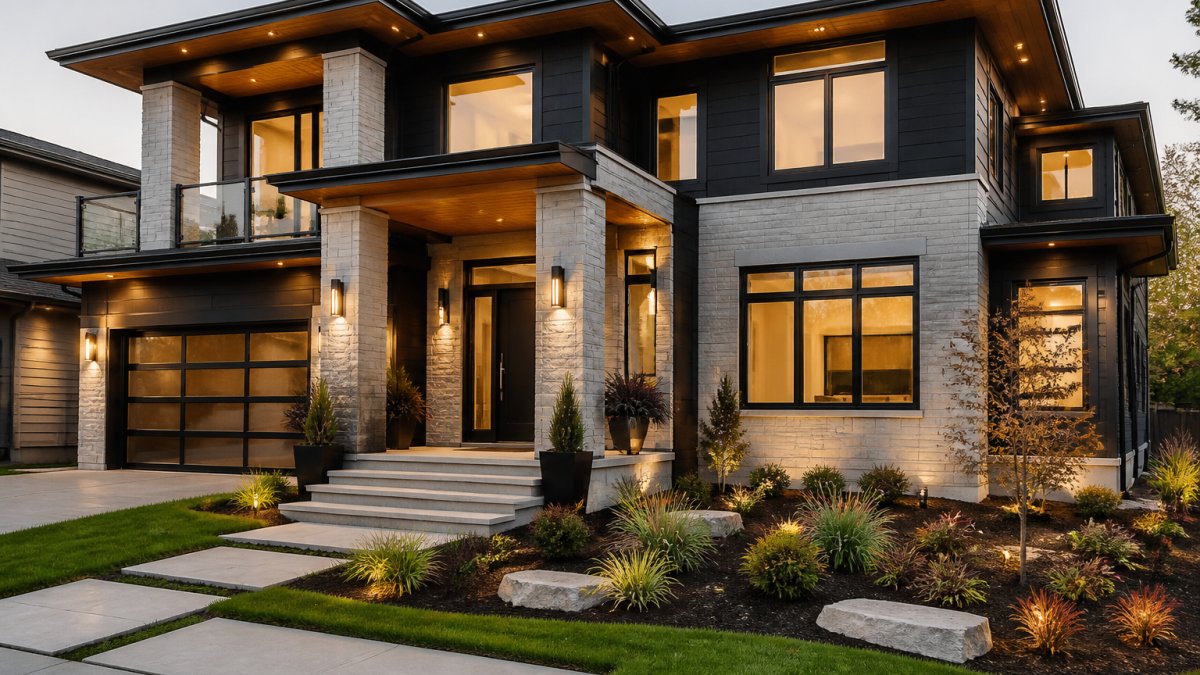
Modern home exterior design in 2026 balances aesthetics with practicality: clean lines, natural materials, and palettes that complement the landscape, with homeowners prioritizing durability alongside curb appeal.
Homeowners want exteriors that look intentional, age gracefully, and require minimal upkeep, the best modern home exterior design achieves all three.
The modern home exterior design movement also reflects climate realities: a palette that works in the Southwest may not suit the Northeast.
2026 Exterior Home Color Trends Shaping Curb Appeal
Color drives curb appeal more than any other element. The 2026 exterior home color trends depart from stark whites and bold accents toward sophisticated, grounded palettes inspired by nature.
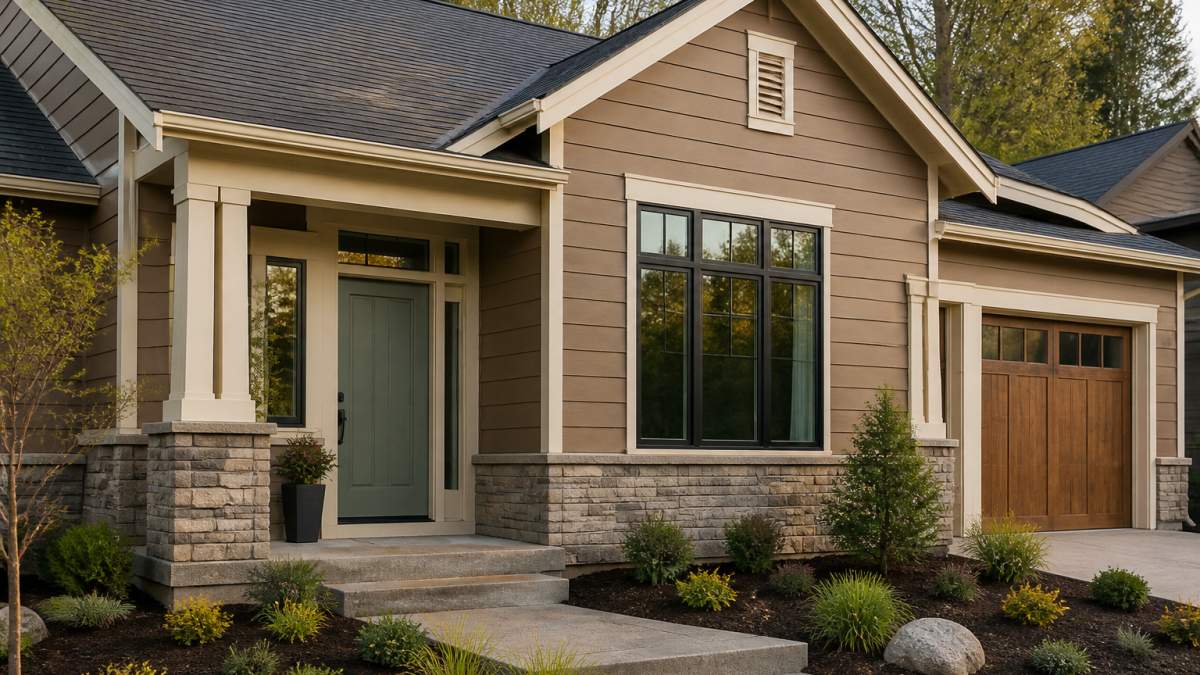
The dominant trend is restraint: instead of drawing attention with contrast, successful exteriors use color to create calm, inviting spaces that work across styles and climates.
Warm Earth Tones and Nature-Inspired Neutrals
Warm earth tones dominate 2026 exterior home color trends. Creams, warm beiges, soft clay, and muted browns create a foundation that feels modern and timeless.
These neutrals work because they reference natural materials, cream evokes limestone or aged wood, warm beige suggests stucco or clay, grounding homes in their environment.
Avoid sterile whites: pure white reads as harsh and institutional, while warm whites with subtle undertones feel intentional, think cream, ivory, or off-white.
Pair warm neutrals with natural materials, wood accents, stone details, and bronze or aged copper hardware, for visual interest without bold contrast.
Muted Greens and Sage Shades
Sage green and muted green tones are reshaping modern home exterior design in 2026, feeling contemporary yet calming and inspired by landscape rather than trends.
The critical distinction is muting: bright, saturated greens feel juvenile, while muted, dusty greens with gray undertones feel sophisticated.
Green also performs well across seasons: it complements spring and summer landscapes naturally, and in fall and winter it provides visual continuity against bare trees.
Moody Blues and Sophisticated Darks
Deep blues, charcoal grays, and near-black tones represent the bold end of 2026 exterior home color trends. These colors work best on homes with strong architectural details or substantial trim.
Moody blue reads as modern and intentional when paired with white or cream trim for dramatic contrast, plus natural wood accents to soften the effect, curated rather than cold.
Dark exteriors demand quality trim and architectural details to avoid appearing flat, plus consistent maintenance, since dirt and dust show more readily on dark surfaces.
The payoff is striking curb appeal. A well-executed dark exterior commands attention and creates a memorable impression.
Low-Contrast Exterior Schemes
Low-contrast schemes are the subtlest 2026 exterior home color trend: instead of light siding with white trim, homeowners use similar tones throughout.
Cream siding with warm white trim, warm gray with greige trim, sage green with soft green-gray trim, these combinations create visual interest through texture and material variation rather than color shock.
Low-contrast schemes feel cohesive and sophisticated. They're also forgiving. Small imperfections and weathering show less obviously than on high-contrast homes.
Modern Exterior Siding Ideas for 2026
Siding material and color work together. The best modern home exterior design considers both simultaneously.
Natural Materials and Mixed Textures
Natural materials dominate modern exterior siding ideas in 2026: wood, stone, metal, and fiber cement create visual richness synthetics struggle to match.
Mixed textures add depth. A home might combine:
- Fiber cement board siding on the main facade
- Real wood shiplap on an accent wall
- Stone or brick details at the foundation or around openings
- Metal accents (gutters, downspouts, railings) in bronze or aged copper
The combination feels intentional and premium, with each material serving a purpose.
Wood remains popular despite maintenance demands: modern treatments make it more durable than before, and homeowners who maintain it enjoy authentic character other materials can't replicate.
Facade Combinations That Work
Successful facade combinations balance visual interest with coherence. The strongest modern home exterior designs use dominance: one material or color occupies 60-70% of the facade, with secondary materials comprising the rest.
Common combinations include:
- Fiber cement siding (primary) with wood or stone accents (secondary)
- Cream siding (primary) with sage green trim or accent panels (secondary)
- Charcoal or dark gray siding (primary) with white trim and wood details (secondary)
- Mixed materials in related tones that create texture variation without color contrast
The goal is visual unity: when materials and colors relate to each other, the home feels designed rather than assembled from leftovers.
Low-Maintenance Exterior Materials for Durability
Durability and maintenance are not the same thing: a material can last 50 years but need repainting every five, while another might need replacement after 20 with almost no upkeep. The right choice depends on how long you plan to stay, your maintenance tolerance, and your budget.
Fiber Cement Siding
Fiber cement siding offers one of the best balances of durability and low maintenance. It resists rot, insects, and warping, holds paint for 10-15 years in most climates, needs no staining, and is non-combustible.
Lifespan: 30-50 years with proper installation. Maintenance: Repaint every 10-15 years. Occasional cleaning with mild soap and water.
Best for: Homeowners who want long-term performance with minimal ongoing effort.
Metal Roofing and Gutters
Modern metal roofing, standing seam steel, aluminum, or copper, has improved dramatically. It resists rust and corrosion when properly coated, handles extreme weather better than asphalt, and reflects heat, potentially reducing cooling costs by 10-25% in hot climates, according to the U.S. Department of Energy.
Lifespan: 40-70 years for steel and aluminum; 70-100+ years for copper. Maintenance: Occasional cleaning to remove debris. Check fasteners and seals every few years.
Best for: Homeowners in extreme climates or those planning to stay long-term.
Stone and Brick
Stone and brick require minimal maintenance beyond occasional cleaning, develop character over time rather than deteriorating, resist fire, insects, and rot, and need no painting or staining.
Lifespan: 75-100+ years. Maintenance: Inspect mortar joints every 5-10 years. Clean with a gentle detergent and water.
Best for: Homeowners seeking permanence and low lifetime maintenance.
Composite Decking and Trim
Composite materials eliminate wood maintenance: they don't rot, splinter, or need staining, and they resist fading and moisture. They cost more than wood but justify it through reduced labor and replacement frequency.
Lifespan: 25-50 years depending on product line. Maintenance: Occasional cleaning with soap and water. No staining or sealing.
Best for: Homeowners who want the look of wood without the upkeep.
The Real Cost of Low Maintenance
Low-maintenance materials typically cost more upfront but less over time. A wood-sided home might require significant painting and repairs every 5-7 years, while a fiber cement installation might need repainting every 10-15 years.
Over 30 years, the low-maintenance option often costs less in total, and delivers better curb appeal with less effort.
Wizard Restoration and Remodeling LLC helps homeowners evaluate material durability, maintenance requirements, and long-term costs so they can choose exteriors that perform for decades.
Home Exterior Renovation Ideas: Climate-Specific Choices
Most trend roundups present exterior design as universally applicable. It isn't: a palette, cladding, or roofing choice that performs beautifully in one region can fail prematurely in another, determining whether a modern exterior looks good for five years or twenty-five.
Hot, Dry Climates
In regions with intense sun and low humidity, the primary enemies are UV degradation and thermal cycling. Light-colored siding, cream, warm beige, soft white, reflects solar radiation and reduces cooling loads.
Material choices matter more than color alone. Fiber cement holds paint well in high heat and resists warping, and stucco and stone perform exceptionally well.
Landscaping should be drought-tolerant and fire-aware: in wildfire-prone areas, maintain at least 30 feet of defensible space using gravel, pavers, or low-growing native plants rather than mulch or ornamental grasses.
Cold, Wet Climates
Freeze-thaw cycles and moisture management drive material performance in cold, wet regions. Dark colors absorb heat and can marginally reduce heating costs, but the bigger concern is ice damming and water intrusion.
Fiber cement siding performs strongly in freeze-thaw conditions because it resists moisture absorption, and engineered wood performs well when properly finished. Brick and stone are excellent but require proper flashing and weep holes.
Roofing should be rated for freeze-thaw resistance: metal sheds snow well and resists ice damming with proper underlayment, while asphalt shingles in cold climates can become brittle and crack if walked on in freezing temperatures.
Humid Climates
In humid regions, mold, mildew, and rot are the primary threats. Ventilation and moisture resistance should guide every material decision.
Fiber cement resists rot and mildew better than wood.
Paint and stain must be formulated for mildew resistance, since standard exterior paints can support mold growth in humid conditions. Look for products labeled with mildewcide additives.
Roofing should include proper attic ventilation to prevent moisture buildup. Ridge vents, soffit vents, and baffles work together to keep the roof deck dry. Without adequate ventilation, even minor roof leaks can lead to widespread rot.
Mixed and Extreme Climates
Many regions experience both extreme heat and cold, or heavy rain and dry spells, so material versatility matters most. Fiber cement performs well across a wide range of conditions, metal roofing handles thermal expansion and contraction better than asphalt, and stone and brick are durable but require proper detailing for moisture and thermal movement.
The takeaway: climate should drive material selection before color or style. A beautiful exterior that fails in five years is not a successful renovation.
Wizard Restoration and Remodeling LLC helps homeowners match materials and colors to local climate realities, ensuring that modern exteriors perform as well as they look.
Bringing Modern Design Together Without Overcomplicating
The strongest modern home exterior designs feel simple. This simplicity requires intentional choices.
Start with a color palette: one primary color (siding), one secondary (trim or accents), and one tertiary (door or accent details).
Consider scale and proportion. Large expanses of siding need visual breaks. Trim, windows, doors, and architectural details create rhythm.
Step back and assess: does the design feel intentional or accidental? If you need three sentences to explain your choices, simplify further.
Modern home exterior design in 2026 prioritizes intentionality, durability, and cohesion. The trends we've outlined reflect how homeowners now balance aesthetics with practicality.
Frequently Asked Questions
What are the biggest home exterior design trends for 2026?
The dominant trends center on natural, muted color palettes, mixed-material facades combining siding with stone or wood accents, and low-maintenance materials that resist weather damage. Modern home exterior design now prioritizes sustainability, durability, and cohesive color schemes that complement the landscape rather than contrast sharply with it. Warm earth tones, sage greens, and moody blues are replacing bright or saturated colors, while natural modern and modern farmhouse styles continue to influence residential design.
Which exterior house colors are trending in 2026?
Warm neutrals like cream, beige, and clay lead the palette, paired with muted greens including sage and soft forest tones. Moody blues and charcoal accents add sophistication without harsh contrast. Low-contrast exterior schemes, where siding, trim, and cladding colors sit close on the color wheel, create a cohesive, intentional look. Black and white combinations remain timeless for trim and accent details, but the trend moves away from pure white as a dominant color toward softer, warmer creams and grays.
What exterior materials make a home look more modern?
Modern exterior design emphasizes natural materials and mixed textures: wood accents, stone cladding, board-and-batten siding, and composite materials that mimic natural finishes. Combining two or three facade materials, such as horizontal siding with vertical wood slats and a stone base, creates visual interest while staying cohesive. Low-maintenance materials like fiber cement and engineered wood resist weather damage and fading, reducing long-term maintenance costs while maintaining a contemporary appearance.
How can I modernize my home's exterior without a full renovation?
Start with a fresh exterior paint color in a trending warm neutral or muted tone, then refresh trim and accent details. Add modern hardware to doors and gates, update landscaping to complement your color palette, and consider targeted upgrades like new shutters, lighting fixtures, or a single accent wall with stone or wood cladding. These changes boost curb appeal and align with modern design without requiring siding replacement or structural work. A professional assessment can identify which upgrades deliver the most visual impact for your budget.