 blog
Best Home Remodeling Companies OKC 2026: 7 Top Picks
Table of Contents
- How We Chose the Best Home Remodeling Companies in OKC for 2026
- 7 Best Home Remodeling Companies OKC Homeowners Recommend
- Company 1: Full-Service Remodeling and Restoration
- Company 2: Kitchen and Bathroom Specialists
- Company 3: Design-Build Firms
- Company 4: Budget-Friendly and Rental-Property Remodelers
- Company 5: Garage Conversions and Additions
- Company 6: Historic Home Renovation Experts
- Company 7: Energy-Efficiency and Resilience Upgrades
- Home Renovation Cost Estimates: What to Expect in 2026
- Questions to Ask a Remodeling Contractor Before You Sign
- Home Remodeling Contractor Reviews and References: How to Read Them
- Home Remodeling Project Timeline: From Consultation to Final Walkthrough
- How to Compare Bids and Manage Your Remodeling Project
- Frequently Asked Questions
Last Updated: October 18, 2026
How We Chose the Best Home Remodeling Companies in OKC for 2026
Finding the best home remodeling companies OKC homeowners trust means ranking contractors by the unglamorous parts: permits, insurance, and change-order math. A remodel that looks flawless in a portfolio but blows its budget in month two is not a good remodel.
Selection Criteria: What Separates a Good Remodeler From a Great One
A great remodeler does three things a good one skips: scopes the project in writing before work starts, names who will run your job, and tells you what could go wrong and what it would cost.
We scored companies on six factors:
- Scope clarity: written line-item estimates, not lump sums
- Licensing and insurance: verifiable, current, and matched to the work
- Communication: a single point of contact and a set update schedule
- Change-order discipline: how overages get approved and priced
- Review depth: patterns across many reviews, not one glowing post
- Local track record: completed projects in the Oklahoma City metro
Licensing, Insurance, and Permit Checks You Must Verify
Oklahoma does not issue a single statewide general contractor license, so verification is on you. Ask each company for its Oklahoma Construction Industries Board registration, a general liability insurance certificate, and proof of workers' compensation coverage, then call the insurer to confirm the policy is active.
Permits are the other gate. Most structural, electrical, plumbing, and mechanical work requires a permit from the local code authority, and the Oklahoma Construction Industries Board publishes registration lookup tools.
7 Best Home Remodeling Companies OKC Homeowners Recommend
This list organizes companies by specialty rather than a single score, because a kitchen specialist and a garage converter are not competing for the same job.
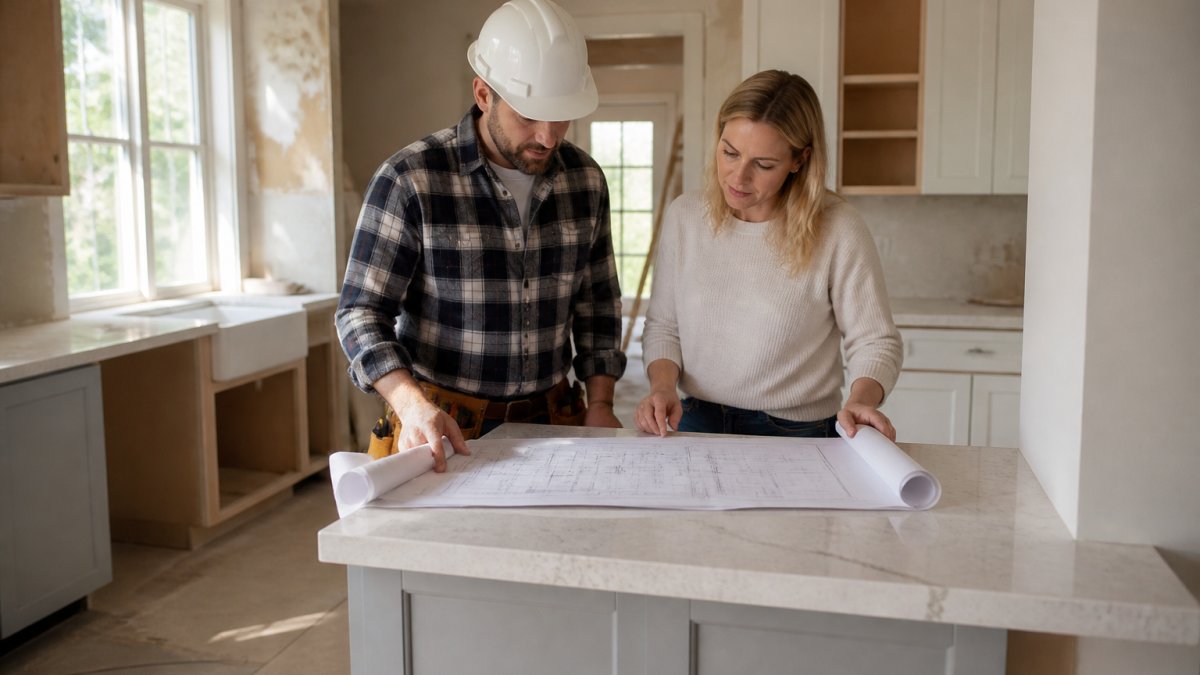
We do not publish unverifiable star ratings or rank companies by ad spend. Each entry covers the specialty, project fit, and the questions that expose whether the company suits your job.
Company 1: Full-Service Remodeling and Restoration
Our top pick for most homeowners is Wizard Restoration and Remodeling LLC. Most real remodels are not one trade: a bathroom remodel uncovers a slow leak, a kitchen refresh reveals damaged siding.
Confirm before you sign: the name of the project manager assigned to your job, the written change-order process, and whether the company pulls permits in-house or subcontracts that step.
Company 2: Kitchen and Bathroom Specialists
Kitchen and bathroom specialists focus on the two rooms where cost per square foot runs highest. Their advantage is repetition: they know cabinet lead times, countertop templating, and waterproofing cold.
Ask how many projects in the past year required a change order and why, plus the typical lead time between signed contract and demolition.
Company 3: Design-Build Firms
Design-build firms combine designer and builder in one contract, removing the gap where a designer draws something the builder cannot price. It costs more upfront, and the design fee is sometimes non-refundable if you walk away before construction.
Ask whether the design fee is credited toward the construction contract, who owns the drawings if you part ways, and whether the same entity that designs also pulls the permits.
Company 4: Budget-Friendly and Rental-Property Remodelers
Budget-friendly remodelers are built for scope control, not high-end finishes. They work from a fixed scope with defined allowances: a fit for rental turns, pre-sale refreshes, and homeowners who need a clean, functional result without custom millwork or imported tile.
Budget-friendly is not the same as cheap. The right budget remodeler gives you a fixed, itemized scope you can compare line by line.
Company 5: Garage Conversions and Additions
Garage conversions and additions sit at the intersection of structural and finish work, and usually require permits for egress, insulation, and electrical. A specialist knows what the local code authority will flag.
Ask whether the company handles the structural engineering and drawings in-house or coordinates a third party, and ask for a recent project where the permit review required a revision.
Company 6: Historic Home Renovation Experts
Older homes bring plaster walls, knob-and-tube wiring, and nonstandard dimensions. Historic renovation specialists plan for what is behind the wall instead of treating it as a surprise.
Ask for a recent project where opening a wall changed the scope, and ask how the change was priced and approved. A specialist will have a clear answer; a generalist will hedge.
Company 7: Energy-Efficiency and Resilience Upgrades
Energy and resilience contractors focus on insulation, air sealing, window performance, and storm resistance. These upgrades rarely photograph well but change how a house performs. Ask for a before-and-after assessment rather than a materials list.
Ask whether they perform a blower-door test before and after the work, and whether they provide a written report you can keep.
Home Renovation Cost Estimates: What to Expect in 2026
Home renovation cost estimates vary too widely for a single number to be honest. Scope, material grade, structural discoveries, and permits all move the total. What you can control is how the estimate is built, and that is where most homeowners lose money.
Why a Single Square-Foot Number Misleads
A cost-per-square-foot figure blends labor, materials, permits, and contingency into one number that hides the parts you can negotiate. Two bids at the same per-square-foot price can differ by tens of thousands once you compare inclusions. Compare the line items behind the total.
The Line Items Every Estimate Should Separate
Ask each contractor to break the estimate into these categories, and compare them side by side:
- Labor: demolition, rough-in, finish carpentry, painting, cleanup
- Materials: a separate allowance for each major category (cabinets, countertops, tile, flooring, fixtures)
- Permits and inspections: the fee itself plus who schedules the inspections
- Contingency: a stated line, not an implied one
- Overhead and profit: whether it is a line item or baked into unit prices
An estimate that presents a single lump sum is not wrong, but it is not comparable. Ask for the breakdown in writing before you compare bids.
Allowances: Where Budgets Quietly Break
An allowance is a placeholder dollar amount for a material the homeowner has not selected yet. A cabinet allowance of one figure and a final selection at a higher figure is the most common source of mid-project overage. Ask for the allowance on every major material line, price your selections against it before you sign, and get any difference in writing as a change order before ordering.
Contingency: How Much to Hold Back
On older homes, a contingency of 10 to 20 percent of construction cost is common, because hidden damage is the norm. On newer homes with few unknowns, a smaller contingency is often enough. The key is that it is a stated line in the contract, not a verbal promise that overages will be handled fairly.
How to Compare Bids Without Getting Fooled
Normalize every bid to the same written scope before you look at price, then compare what is included, what is excluded, and how changes get priced. A bid that excludes permit fees, debris hauling, or paint is not cheaper; it is incomplete.
Questions to Ask a Remodeling Contractor Before You Sign
The right questions separate a professional from a salesperson. Ask these before signing:
- Who is my day-to-day contact, and how often will I hear from them?
- What is your process for pricing and approving a change order?
- Which permits will you pull, and who schedules the inspections?
- Can I see three recent projects in the area, with references?
- What does your warranty cover, and for how long?
- How do you handle a discovery behind the wall mid-project?
The answers matter more than the credentials on a website. A contractor who answers these crisply has done this before.
Home Remodeling Contractor Reviews and References: How to Read Them
Home remodeling contractor reviews and references are the most misused hiring tool. One five-star review proves nothing; a pattern across many reviews proves a lot.
Read for repetition. Check the FTC guidance on online reviews for how to spot incentivized or fake reviews.
References are stronger than reviews because you can ask follow-up questions.
Home Remodeling Project Timeline: From Consultation to Final Walkthrough
A home remodeling project timeline depends on scope, but the phases are consistent: consultation and scope, design and permitting, construction, and a final walkthrough with a punch list.
Permitting is the phase homeowners underestimate. Local review and inspection schedules add time you cannot compress. Ask each contractor for their realistic permit timeline for your project type, then add a buffer.
| Phase | What Happens | What You Should Receive |
|---|---|---|
| Consultation | Site visit, goals, rough budget | Written scope direction |
| Design and permitting | Drawings, selections, permit filing | Approved plans, permit number |
| Construction | Demolition through finishes | Schedule updates, change orders |
| Final walkthrough | Punch list, inspection sign-off | Warranty documents |
How to Compare Bids and Manage Your Remodeling Project
Comparing bids is where most homeowners lose money, and it is entirely avoidable. Normalize every bid to the same written scope before you look at price.
Manage the project with a weekly rhythm: confirm the schedule, log any change in writing, and photograph progress.
Choosing a remodeling partner comes down to one question: who will still answer the phone when something unexpected shows up mid-project?
Frequently Asked Questions
How do I choose a reliable home remodeling contractor in OKC?
Start by verifying Oklahoma licensing through the Construction Industries Board and confirming current liability and workers' comp insurance. Ask for three recent local references and read home remodeling contractor reviews and references on Google and the BBB. Get at least three written bids with itemized scope, then compare line by line rather than by total price. A contractor who answers questions to ask a remodeling contractor clearly, provides a written timeline, and puts payment milestones in the contract is usually the safer pick.
What should I ask a remodeling company before hiring?
Ask who will be on site daily, whether subs are in-house or outsourced, and how change orders are priced. Request a written home remodeling project timeline with milestones and a payment schedule tied to completion, not deposit-heavy front-loading. Confirm permit responsibility, warranty length, and who handles punch-list items. Finally, ask for two references from projects similar in scope to yours and call them. Vague answers on any of these are a warning sign worth taking seriously.
How long does a typical home remodeling project take?
A bathroom remodel usually runs 3 to 6 weeks, a kitchen 6 to 12 weeks, and a full interior renovation 3 to 6 months depending on scope and permit timelines. Oklahoma City permit review and material lead times can add weeks. Ask each company for a home remodeling project timeline in writing with start and completion dates, and build a 10 to 15 percent buffer for weather and inspection delays. Contractors who refuse to commit to dates in writing are a risk.
Should I get multiple estimates for a home remodel?
Yes. Get at least three itemized bids so you can compare scope, materials, and labor line by line. Home renovation cost estimates vary widely in OKC because some bids exclude permits, disposal, or finish upgrades. Ask each contractor to quote the same scope so the comparison is fair. The lowest bid is often the one with the most exclusions, so weigh the total scope and warranty against price before deciding.